

A BEGINNERS GUIDE TO HOME ROASTING (AND WHY ITS EASIER THAN YOU THINK)
Your coffee is often older than you think. The beans sitting in your cupboard were probably roasted weeks, maybe months, before you opened the bag. By the time you're grinding them, they've already lost a good chunk of what made them worth buying in the first place. That's not a dig at your local roaster - it's just the nature of supply chains. Beans get roasted, bagged, shipped, shelved, and eventually bought. Freshness fades the whole way through. The only real fix is to close that gap yourself. Which is where home roasting comes in.
WHY ROAST YOUR OWN BEANS
If you've already invested in a decent espresso machine, a proper grinder, and scales that measure to the tenth of a gram, you've done the hard work of controlling everything downstream of the bean - just not the bean itself. You're still buying it roasted by someone else, on their schedule, to their taste, at their price.
Roasting at home closes that final gap. You choose the green beans. You choose the roast level. You control freshness down to the day - even the hour, if you're that way inclined (some of us are). You’ve dialled everything else in – this is just the last piece of the puzzle.
The catch, historically, has been that roasting your own coffee meant babysitting a pan on the stove, guessing at temperatures, and accepting a fair bit of trial, error, and slightly smoky kitchens. That's the part we've spent years solving.

WHERE THE NANO 7 COMES IN
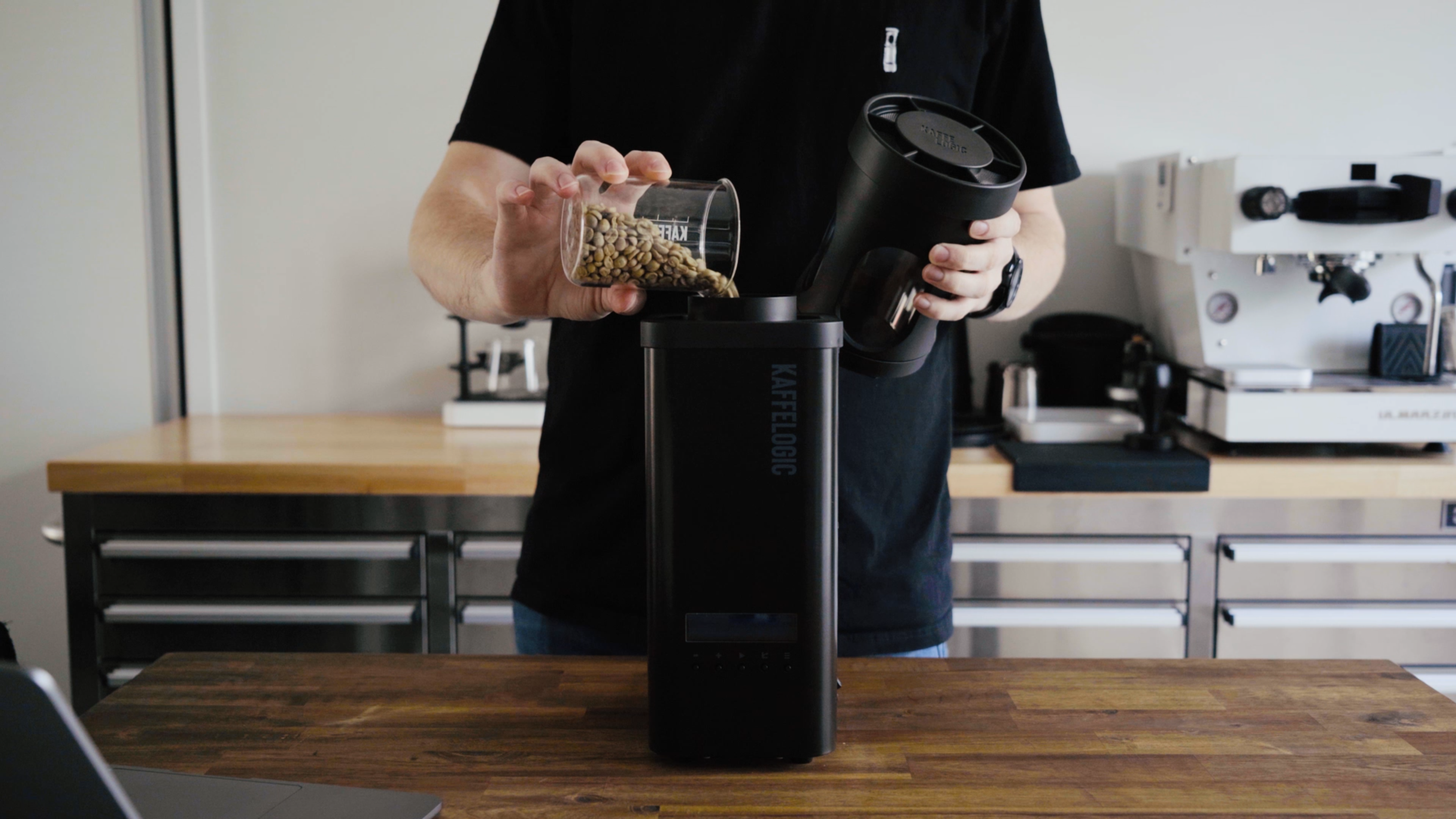
The Kaffelogic Nano 7 is built to remove the guesswork, not the process. It uses precise, software-controlled roasting profiles rather than a dial and a prayer, so the same profile gives you the same result, roast after roast. Consistency isn't a nice-to-have here - it's the whole point.
For someone just starting out, that means you don't need to understand the finer points of Maillard reactions or first-crack timing to get a genuinely good roast. Load your beans, select a profile, and let the machine do what it's designed to do. It's about as close to "press start and get specialty coffee" as home roasting gets.
IT DOESN'T STOP AT BEGINNER FRIENDLY
Here's the part that tends to surprise people: the same machine that makes roasting approachable on day one is the same machine serious hobbyists are still using years later. As your palate develops and your curiosity grows, the Nano 7 comes along with you. You can dig into profile editing, tweak variables, and chase the exact roast character you're after - light and floral, dark and bold, or somewhere in the middle you haven't found yet.
Most gear in this hobby gets outgrown. You start entry-level, then upgrade, then upgrade again. The Nano 7 is built to grow with you instead - which is really just another way of saying it's the last upgrade your setup will ever need. You're not buying a beginner roaster or an enthusiast roaster. You're buying the one that becomes whichever you need it to be.

SO, WHAT HAPPENS DURING A ROAST
For the curious: roasting is the controlled application of heat that triggers a complex series of chemical and physical changes inside the bean. During the Maillard reaction, sugars react with amino compounds to create many of the flavours, aromas and brown colour associated with roasted coffee. Caramelisation and the breakdown of other compounds also contribute to the coffee’s sweetness, aroma and overall character. Meanwhile the bean loses moisture, expands, and its cell structure changes, eventually reaching "first crack" - the audible point where structural changes let the bean's internal pressure release.
The timing and rate of heat through this process (often referred to as the roast curve, or development time after first crack) is what determines the outcome. Too fast or too hot, and you can scorch the exterior before the interior develops, leaving harsh or bitter notes. Too slow, and you risk underdeveloped, flat-tasting coffee that never got the chance to build the flavour compounds you're after.
Traditionally, managing this in real time took real and honed skill, built up over years, often on unforgiving equipment where a few seconds' difference in timing changed the result. The Nano 7 handles the technical heavy lifting - even, controlled heat and repeatable timing - so what you're really learning as a beginner is your own preference. Do you like a brighter, fruitier profile? Something heavier and chocolatey? That's the fun part, and it's the part we think you should actually get to enjoy, rather than spending your first six months just trying not to burn the beans.

GETTING STARTED
If you're new to this, our suggestion is simple: don't overthink it. Pick a Nano 7 profile suited to the beans you've got, run it, taste the result, and adjust from there if you want to. You'll get a good cup well before you understand all the "why" behind it - and honestly, that's how it should work. The understanding comes with time. The good coffee can start on day one.
Note: some specifics of the roasting process (timing, temperature curves, profile mechanics) will vary by bean and setup - your Nano 7 documentation and profile library are the best reference for exact settings.